
Google will be pushing two dedicated TPUs front-hard Nvidia can work with AMD chips
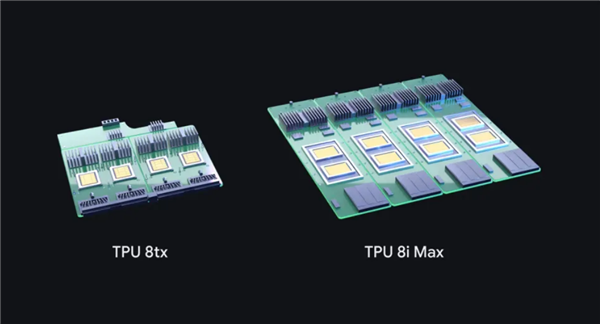
Google will introduce two new tensor processor (TPU) chips, TPU 8tx and TPU 8i Max, to meet the needs of different AI applications.
Among them, TPU 8tx is oriented to the confidential computing needs of government agencies and regulated industries, and works with AMD chips; TPU 8i Max is mainly oriented to AI applications that require long context windows, and improves computing power and memory capacity by packaging two TPU chips together.
Google's head of chips, Amin Vahdat, said two new products were expected next year. Industry research predicts that Google's TPU-related chip, software and hardware sales will exceed $135 billion by 2028, up from $12 billion projected this year.

Google said that the TPU business currently has nearly 100 customers, and the scope of application has also extended to customers' own data centers.
Industry research estimates that excluding chips leased through Google Cloud, TPU chip sales will grow from about $12 billion this year to more than $135 billion in 2028, an increase of more than 11 times in two years.
However, Nvidia still has more powerful products in its hands. Nvidia's next-generation Rubin chip has a computing power of 35 floating points (PFLOPS, thousand trillion floating point operations per second); the Google TPU 8i is about 10 floating points, and the TPU 8i Max is about 20 floating points.
Google focuses on price-performance advantages. Industry analyst SemiAnalysis points out that Google's existing Ironwood TPUs can achieve up to three times the AI processing power per dollar when running AI agent tasks; of course, Nvidia's flagship products still prevail if extreme absolute speed is pursued.
Source: MyDrivers (Fast Technology). Content is presented with source attribution. Read the original report.
Back to News